


The Ancient Face Behind Stones + Orbits

The Venus of Brassempouy stands against all odds—a 3.65-centimeter testament to humanity's oldest truth: that even 25,000 years ago in the depths of the Paleolithic Ice Age, we have always made room for beauty alongside survival.
She is almost impossibly small. Carved from mammoth ivory, she fits in the palm of a hand, weighs less than a letter. Yet she carries the weight of revelation. When French archaeologist Édouard Piette pulled her from the sediment of the Grotte du Pape in 1894, he uncovered not just an artifact but evidence of something profound: the human commitment to beauty predates cities, agriculture, written language—predates nearly everything we associate with civilization itself.
The precision of her features stops you. This is not symbolic representation or religious abstraction, but something approaching portraiture. The forehead curves naturally. The nose projects in actual dimensional space. Someone took stone tools—flint burins and scrapers that required their own specialized knowledge to create—and spent an estimated forty hours bringing out these subtle planes and shadows from ivory. The artist even indicated pupils with tiny drilled holes, a detail that would have required extraordinary patience and contributed nothing to the object's practical value.
A face out of time
The Venus of Brassempouy is anomalous among Paleolithic figurines. Where the Venus of Willendorf emphasizes fertility through exaggerated form, where the Venus of Lespugue reduces the female figure to geometric abstraction, the Brassempouy Venus offers us something different: a specific face, possibly even a specific person. The implications are staggering. Creating a realistic portrait requires not just technical skill but sophisticated cognitive architecture—the ability to see oneself from outside, to understand how three-dimensional forms translate to carved relief, to imagine preservation beyond one's own lifetime.
The detail that captivates scholars most is her hairstyle, or perhaps hood—the debate continues after more than a century. Two series of shallow incisions create a perfect checkerboard pattern across her head, each line deliberate, each intersection precise. Some see elaborate braiding, others a woven head covering, still others a ceremonial net. Whatever it represents, someone deemed this decorative detail worth hours of additional work. In a world where calories were precious and daylight limited, this represents an almost outrageous investment in pure aesthetics.
She emerged from what archaeologists call the Gravettian period, roughly 29,000 to 22,000 years ago, when anatomically modern humans were establishing themselves across Ice Age Europe. These were not primitive people but sophisticated hunters and gatherers who developed specialized tools, created elaborate burials, and—crucially—made jewelry. The same archaeological layers that yielded the Venus also contained ivory beads, shell pendants, and perforated teeth worn as ornaments. Personal adornment and portraiture emerged together, twin expressions of the same human impulse.


The ornament makers
Recent archaeological work has revealed the extent of Paleolithic jewelry-making. These were not crude attempts at decoration but sophisticated productions requiring specialized knowledge. Beads from mammoth ivory had to be sectioned from tusks, shaped, drilled, and polished—each step requiring different tools and techniques. Shells traveled hundreds of miles from their coastal origins, carried by trade networks that spanned the continent. Amber, jet, and other precious materials were sought out, worked, and worn.
The technical parallels between the Venus and contemporary jewelry are precise. Both required understanding material properties—ivory's tendency to crack along growth lines, the way it responds to changes in humidity, its willingness to take a polish. Both demanded what modern craftspeople would recognize as a dialogue with the material, following natural curves where they served the design, working around weaknesses, capitalizing on inherent qualities. The Venus's creator possessed the same patient attention that distinguishes great jewelry from mere ornament.
What strikes most forcefully is the continuity. Ancient goldworking techniques like granulation and filigree, developed millennia after the Venus was carved, follow the same principles: patience, precision, respect for materials. The best contemporary jewelers speak of "listening" to their materials in terms the Venus's creator would have understood.
Creating beautiful objects has never been a luxury for easier times, but something humans have always deemed necessary.
The Venus exists today because of an unbroken chain of human care spanning roughly 1,250 generations. First, her creator polished her smooth, perhaps oiled her against cracking, certainly handled her with the care due something precious. Then she was kept, protected, possibly passed down, eventually buried or lost in a way that allowed preservation. For thousands of years she lay in the cave's sediment, protected by exactly the right conditions—stable temperature, consistent humidity, darkness.
Her discovery began a new chapter of preservation. Museum curators now monitor her environment with scientific precision. She resides in the Musée d'Archéologie Nationale near Paris, viewable only by special appointment, kept in climate-controlled conditions that would seem miraculous to her creator but serve the same purpose as their careful polishing: ensuring she endures.
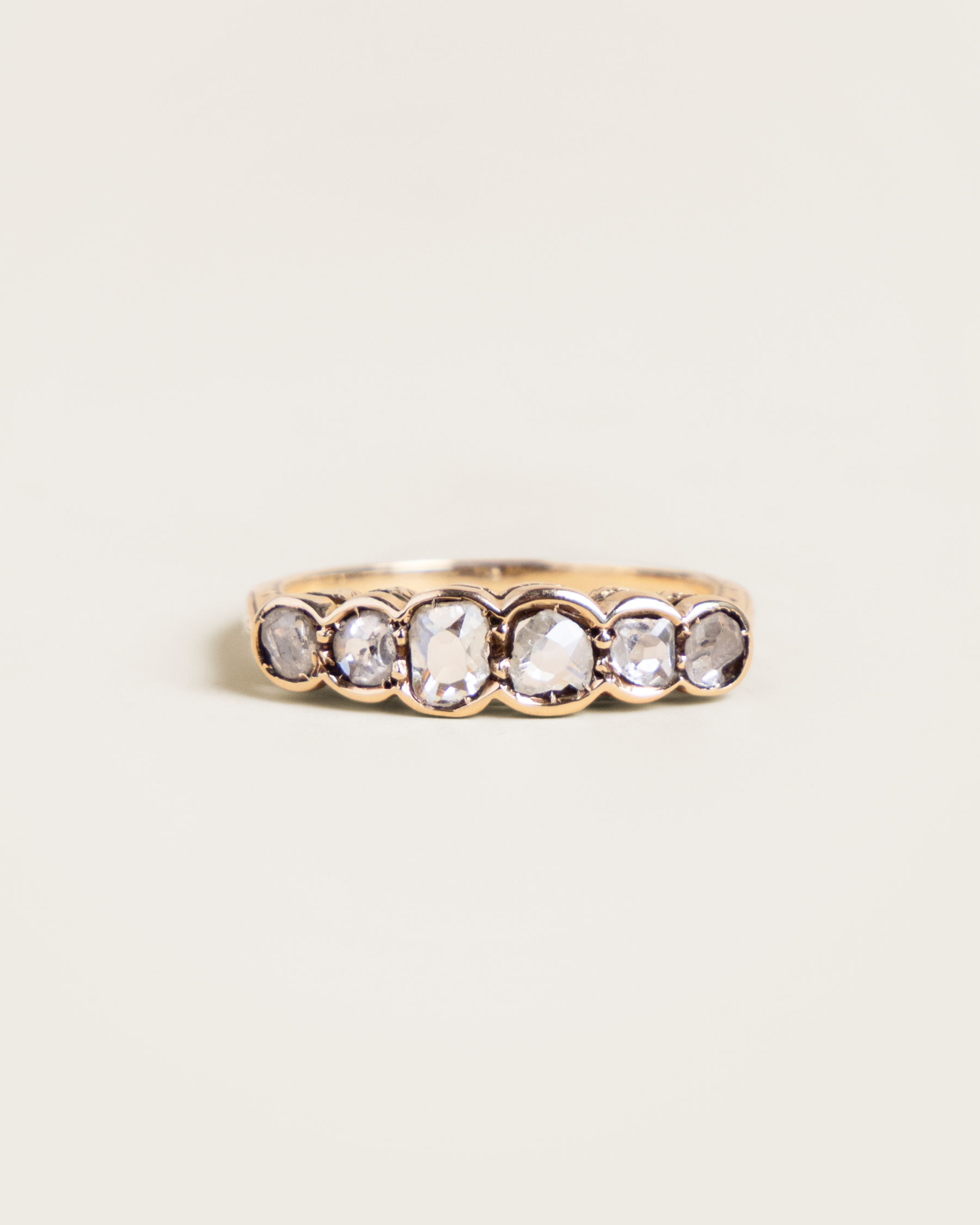
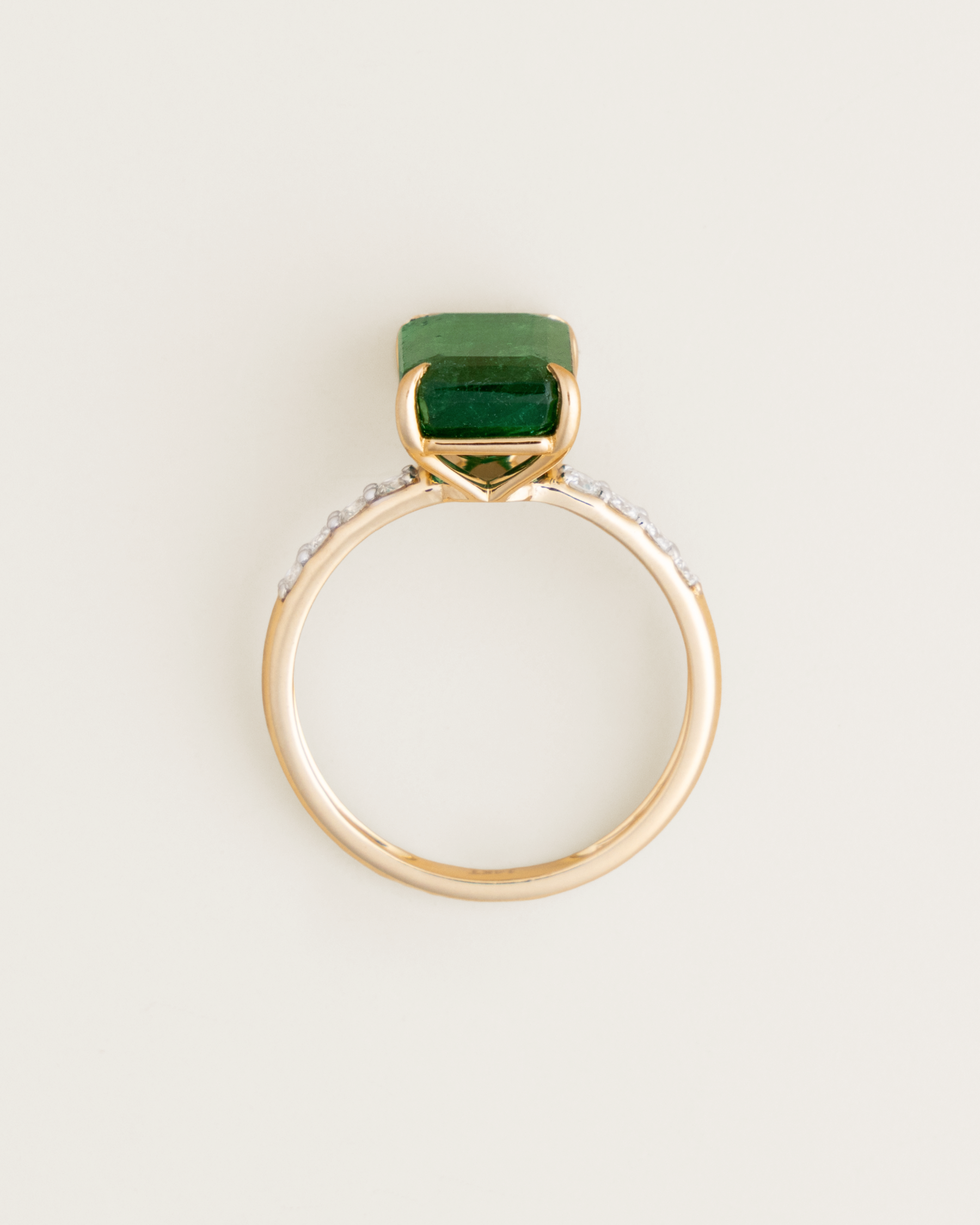
This is what vintage jewelry represents at its best—objects deemed worthy of preservation across generations, beautiful enough to justify the effort of maintaining them, meaningful enough to pass on. Each piece in the Stones + Orbits collection has been similarly chosen, kept, and cared for by previous owners who recognized its worth beyond monetary value.
A necessary beautiful
The Venus predates agriculture by fifteen thousand years. When she was carved, the Sahara was green, the English Channel was a river valley, and at least four other human species shared the planet with us. She has outlasted civilizations that seemed permanent, artistic movements that declared themselves revolutionary, countless assertions that beauty had become obsolete or craftsmanship irrelevant.
She embodies what has forever mattered:
beauty persists.
This persistence isn't accidental. The same impulse that drove someone to spend forty hours carving a face from ivory in the depths of the Ice Age drives contemporary collectors to seek out Art Deco bracelets or Victorian lockets. It's not nostalgia but recognition—understanding that well-made beautiful objects carry something essential forward, something that can't be replicated by mass production or digital simulation.
In choosing vintage jewelry, in preserving and wearing pieces from previous eras, we participate in the same tradition that preserved the Venus. We acknowledge that beauty justifies the time spent creating it, the resources spent preserving it, the effort spent finding it. We reject the contemporary assumption that newer means better, that progress means disposal, that efficiency trumps artistry.
What endures

The Venus of Brassempouy watches from her museum case with the same serene expression she has worn for 250 centuries. She has seen the rise of agriculture, the invention of writing, the birth and death of thousands of languages, the entire span of what we call history. Through it all, humans have continued making beautiful things—carefully, lovingly, often impractically—and other humans have continued preserving them.
She stands as the face of Stones + Orbits because she represents this continuity. Every piece of vintage jewelry connects to this tradition, each one a link in the chain that stretches back to the moment someone first decided that survival alone wasn't sufficient, that life required beauty to be complete. An Edwardian ring, a Georgian brooch, an Art Nouveau pendant—these aren't just decorative objects but declarations of the same faith that created the Venus: faith that beauty matters, that craftsmanship has value, that some things deserve to last.
The Venus knows what we periodically forget and rediscover: that the human need for beauty is not a weakness or a luxury but a defining characteristic of our species. In the harshest conditions we've known, facing challenges we can barely imagine, our ancestors allocated precious time and energy to creating beautiful things. They did this not after solving their practical problems but while actively engaged with them, because they understood what the Venus continues to demonstrate:
we will always make room for beauty alongside survival.
When someone chooses a piece from Stones + Orbits, they join this ancient tradition. They become temporary custodians of objects that preceded them and will, with proper care, outlast them. They participate in the same act of faith that created and preserved the Venus—faith that beautiful things matter enough to make carefully, preserve faithfully, and pass on thoughtfully.
The Venus would recognize them. She is, after all, proof that this recognition transcends time, culture, and circumstance. Across 25,000 years, she speaks the same truth: beauty isn't something humans do when everything else is handled. It's something humans have always done, continue to do, and will always do, because without it, survival itself loses meaning.